The Next Era of Apple Will Not Look Like the Last
By Ricky Gutteridge
Apple has always been misunderstood in real time.
People anchor to the last great thing and miss the system being built underneath. That is happening again as John Ternus steps into a larger leadership spotlight.
To understand where Apple goes next, you have to separate invention from execution, then recognize that Apple has historically dominated both, just in different eras.
Start with the obvious.
In 2007, Steve Jobs stood on stage and introduced the iPhone. It is still hard to fully grasp how aggressive that bet was. A glass slab with no physical keyboard entering a market dominated by BlackBerry and Nokia was not an iteration. It was a complete rejection of the current paradigm.
That kind of innovation only happens when timing, conviction, and product instinct align perfectly. Jobs did not just build a phone. He reset the interface between humans and computing.
But invention is only half the story.
The only thing crazier than inventing the iPhone is getting it into the hands of the world. As of 2025, Apple has distributed roughly 3 billion iPhones. That scale is not just a product story. It is an operational masterpiece.
That is where Tim Cook changed the game.
Cook did not need to reinvent the iPhone. He industrialized it. He built the most sophisticated supply chain in modern business history. Precision manufacturing, global logistics, component sourcing, and inventory discipline all turned Apple from a great product company into an unstoppable distribution machine.
This is the part most people miss.
Innovation is not always visible. Sometimes it shows up as yield improvements, supplier leverage, and the ability to ship at scale without breaking margin. Cook’s innovations were quieter, but just as critical. Without them, the iPhone would have remained a great idea instead of becoming a global standard.
At the same time, Apple kept layering in new experiences.
Take AirPods and Siri. On their own, they can look incremental. Together, they create a new interface layer. Voice, ambient computing, and always-available connectivity shift the iPhone from a device you use to something that is constantly working in the background.
That experience was not imaginable in 2007. The hardware, software, and ecosystem had to mature together. Apple has been quietly building that stack for years.
Which brings us to now.
John Ternus is not stepping into a blank slate. He is inheriting a fully built machine with massive distribution, deep integration, and billions of users already locked into the ecosystem.
My view is that the board has been moving pieces for years to set up this moment. The next phase will look different, and it will catch people off guard.
Here are three predictions.
First, Apple did not abandon the car. It reframed it.
If you spend close to $10 billion building intellectual property, you do not simply walk away from it. You reposition it.
Tesla already showed the path. The long-term opportunity is not just building cars. It is becoming the AI and hardware layer that powers them.
Dealing with regulators and manufacturing entire vehicles is capital intensive and slow. Apple likely recognized that the better move is to own the operating system inside the car.
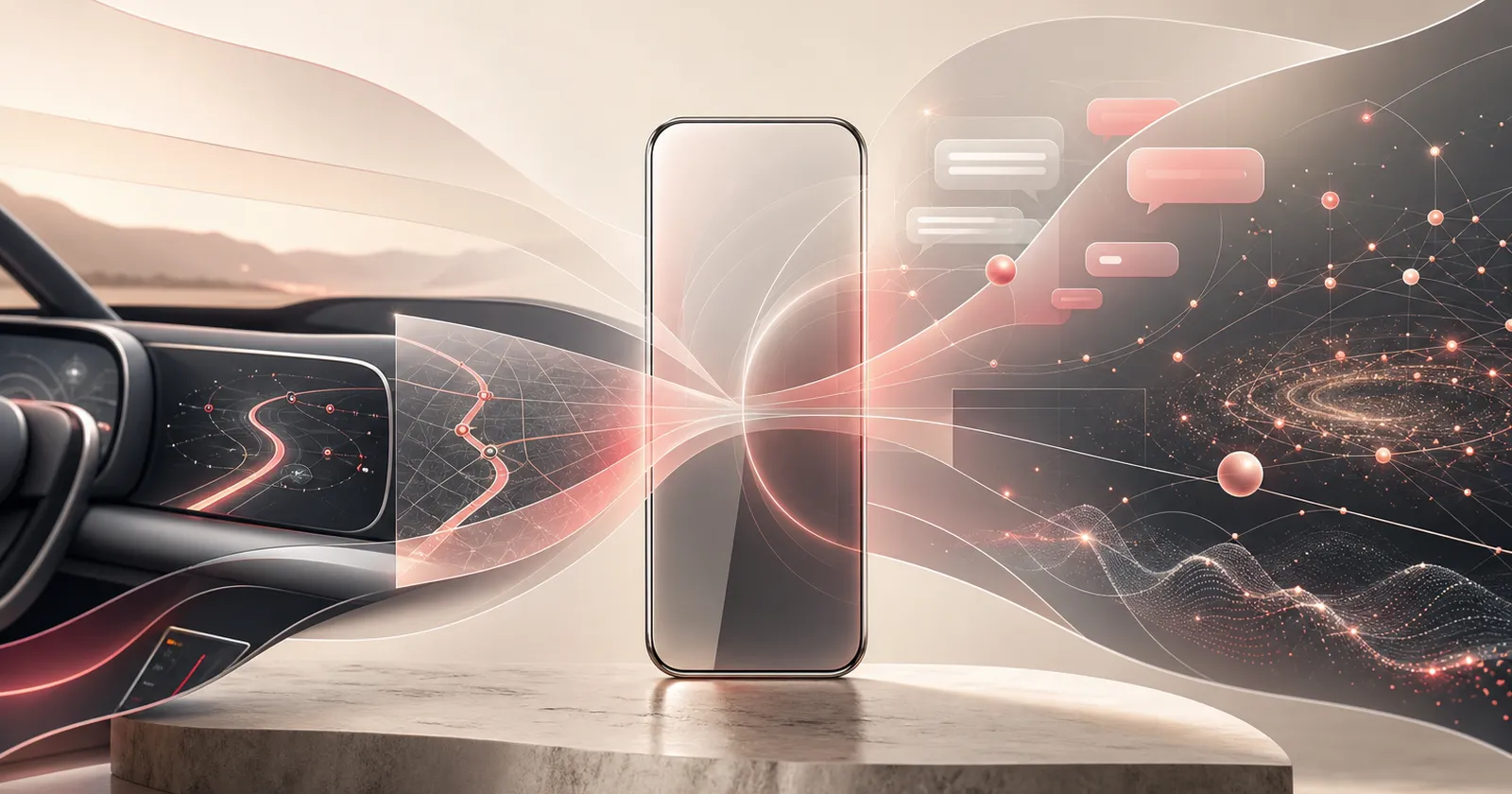
That is why CarPlay keeps expanding. It is no longer just a projection tool. It is becoming the interface layer for the vehicle. Over time, do not be surprised if elements of automation, driver assistance, and AI workflows get embedded directly into that experience.
Apple does not need to build the car to control the experience.
Second, search is about to be redefined, and Apple is positioned to move.
Google reportedly pays Apple tens of billions of dollars a year to remain the default search engine on Apple devices. That arrangement has always served two purposes: it keeps Google dominant, and it delays Apple from entering search in a meaningful way.
But the ground is shifting.
Generative AI is already pulling attention away from traditional search. The old model of typing queries into a browser is fragmenting. This opens the door for Apple to rethink the entire experience.
Apple has been investing in on-device intelligence for years. That matters. If Apple combines local AI processing with a hybrid model that connects to the web and partners, it can build a new form of search that feels more like an assistant than a results page.
This is where things get interesting.
Apple does not need to win search the old way. It can redefine search inside the operating system. If that happens, the leverage Google has today starts to erode.
Third, Messages could evolve into a platform that competes with social networks.
Look at current behavior: group chats, reactions, media sharing, threaded replies. The foundation is already there. It is not a stretch to see how this expands.
The constraint today is the ecosystem boundary.
If Apple opens Messages beyond iOS and makes it a cross-platform network, the dynamics change. You suddenly have a communication layer centered on real identity, tight integration with devices, and a user experience people already understand.
That directly pressures platforms like Facebook and Instagram, which rely on broader, less controlled networks.
The key question is whether Apple wants to make that move. Opening the platform means trading some control for scale. Historically, Apple has been selective about that.
But under new leadership, strategic bets like this become more likely.
The next Apple era will be an orchestration challenge.
Stepping back, the pattern is clear.
Jobs redefined the interface. Cook scaled it to the world. Ternus inherits both and has the opportunity to extend Apple into new categories without needing to rebuild the foundation.
That is a different kind of leadership challenge.
It is less about inventing a single breakthrough product and more about orchestrating a system that touches transportation, communication, and intelligence all at once.
Most people are still looking for the next iPhone moment.
They might miss the fact that Apple is already positioning itself to control the layers around it.
That is how the next era will be built.